AI Automated Exam System: Faster Evaluation With Better Insights
How I built a secure, AI-assisted exam platform that cuts grading time by 60% while improving analytics for faculty and students.
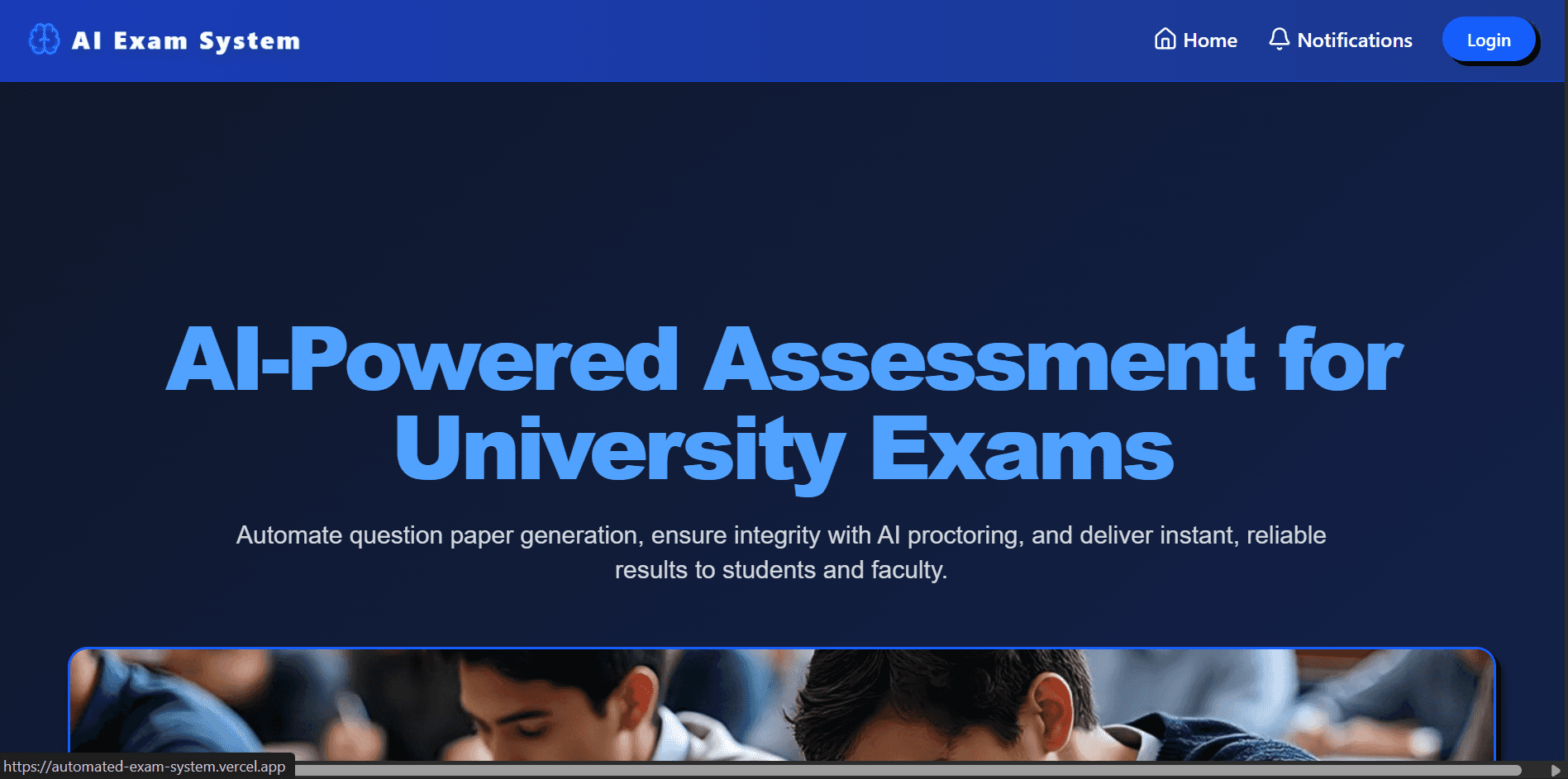
Project overview
This project started with a single bottleneck: descriptive answers were taking faculty days to evaluate, and the feedback students received was inconsistent across subjects. The goal was to build an AI-assisted exam system that could produce structured drafts for grading, preserve academic rigor, and still give teachers the final say. I treated the AI as a powerful co-pilot, not the judge. Every design choice focused on transparency, fairness, and measurable improvement in evaluation speed.
The platform supports question banks, subject-specific exams, and an evaluation pipeline that aligns student responses with rubric points. Instead of returning a single opaque score, the system highlights evidence for each rubric item and attaches actionable feedback. This turns grading into a review workflow, reducing time without compromising quality. Analytics help faculty see class-wide trends, while students get personalized feedback that helps them improve.
Problem framing and requirements
The first requirement was accuracy. Teachers needed to trust the system and be able to validate how marks were assigned. The second requirement was auditability: in case of appeals, every score should be traceable to a rubric decision. Third, the platform had to be scalable for multiple subjects and institutions. Finally, the public-facing pages needed to be SEO-friendly so that institutions searching for "AI exam system" and "automated grading" could discover it easily.
AI-assisted evaluation pipeline
The evaluation flow begins with teachers defining a rubric that maps learning outcomes to measurable criteria. When students submit answers, the system generates a structured summary and matches it against rubric checkpoints. The AI produces a draft score and justification per criterion, then assigns a confidence score. Teachers can accept, edit, or override any rubric line, keeping the final authority in human hands.
This design solves a critical trust issue. Faculty do not see a black-box score; they see the reasoning and can adjust it. It also improves consistency across classes. Because rubrics are stored and reused, two teachers grading the same rubric will see similar evaluation templates. Over time, feedback patterns help the system calibrate and improve.
Key user workflows
- Faculty create subject-specific rubrics with weighted criteria.
- Admins generate exam sessions with rules, timers, and authentication.
- Students take exams securely with autosave and submission locks.
- AI generates rubric-aligned evaluation drafts for teacher review.
- Analytics dashboard highlights weak topics and cohort trends.
Analytics that improve learning outcomes
The analytics layer became just as important as grading. Faculty can filter performance by topic, difficulty, or learning outcome. This enables targeted remediation and more effective class planning. Students also benefit from detailed feedback that tracks progress over time, creating a more personalized learning experience. The system transforms exams into data-driven learning opportunities rather than one-off assessments.
Security and compliance
Because exams are sensitive, security is non-negotiable. The platform uses role-based access control to separate student, faculty, and admin privileges. Logs capture evaluation changes and timestamped overrides. Data storage is segmented by institution to avoid accidental exposure. These security layers are also emphasized in the marketing copy, helping the product rank for terms like "secure exam software" and "academic integrity platform".
Performance + SEO strategy
Public pages are statically optimized with clean metadata, structured data, and content tailored to educational buyers. The landing content includes measurable outcomes—grading time reduced by 60%, improved feedback consistency, and faster exam cycles—so it communicates value clearly. Performance optimizations like caching, pagination, and optimized API routes keep interactions snappy and reduce bounce rates, which indirectly helps SEO rankings.
Tech stack
- Next.js + TypeScript for UI, routing, and SEO metadata
- FastAPI for AI evaluation services and analytics APIs
- MongoDB for flexible exam schemas and rubric storage
- TailwindCSS + Shadcn UI for rapid, accessible UI builds
What I would improve next
The next iteration will add adaptive tests that change question difficulty based on performance. I also plan to expand the analytics to include longitudinal cohort comparisons and integrate more explainability metrics for AI scoring. These upgrades would further strengthen trust, usability, and the SEO narrative around responsible AI in education.
Want to build something similar?
I help teams ship fast, SEO-ready web products with modern stacks. Reach out to discuss your project.
View portfolio →